Small business IT strategy is often treated like a technical decision. It shouldn’t be
Most business owners assume IT is something to delegate—something handled by an internal resource or an external provider behind the scenes.
Until something goes wrong.
A system outage, a security incident, or a failed backup doesn’t stay in IT. It quickly becomes a business problem—impacting revenue, operations, customer experience, and reputation.
That’s why IT support for small business is no longer just a technical function.
It’s a leadership decision.
.
A strong small business IT strategy connects directly to how your business operates day to day
In today’s environment, nearly every core function depends on technology:
- Sales rely on CRM systems and communication tools
- Operations depend on uptime and system performance
- Financial processes rely on secure, accurate data
- Compliance depends on proper data handling and retention
When technology fails, business stops.
This isn’t about inconvenience. It’s about operational continuity.
The Risk of Treating IT as “Someone Else’s Problem”
One of the most common mistakes small businesses make is pushing IT decisions too far down the chain.
It often sounds like:
- “Our IT guy handles that”
- “Our provider takes care of it”
- “We’ll deal with it if something happens”
The issue isn’t delegation—it’s lack of visibility and ownership.
Without leadership involvement:
- Risks go undefined
- Expectations go unclear
- Accountability becomes reactive instead of proactive
And when something breaks, leadership is still the one responsible for the outcome.
What Leadership Should Actually Own
This is where small business IT strategy becomes a leadership responsibility—not just an operational task.
Business owners and executives don’t need to manage IT systems.
But they do need to define the business expectations behind them.
That includes:
1. Risk Tolerance
How secure is secure enough for your business?
What level of exposure is acceptable—and what isn’t?
2. Downtime Impact
If systems go down, how long can the business realistically operate?
What does one hour of downtime actually cost?
3. Recovery Expectations
If data is lost, how quickly can it be recovered?
And more importantly—has that process ever been tested?
4. Investment Alignment
Are IT decisions being made based on business priorities—or just immediate needs?
The Cost of Getting It Wrong
When IT is treated as a background function, the costs don’t show up right away—but they always show up.
- Downtime leads to lost revenue and missed opportunities
- Security gaps create real financial and legal exposure
- Inefficient systems reduce employee productivity
- Unclear strategy leads to inconsistent spending and poor outcomes
These aren’t IT issues.
They are business risks.
What Changes with the Right IT Partner
The right approach to IT support for small business shifts the conversation.
Instead of:
- Waiting for issues
- Responding to problems
- Managing confusion
You get:
- Clear expectations
- Proactive recommendations
- Alignment with business goals
A true IT partner doesn’t just fix problems—they help you make better decisions about technology before problems happen.
If you want a clearer picture of what strong IT support should include, read:
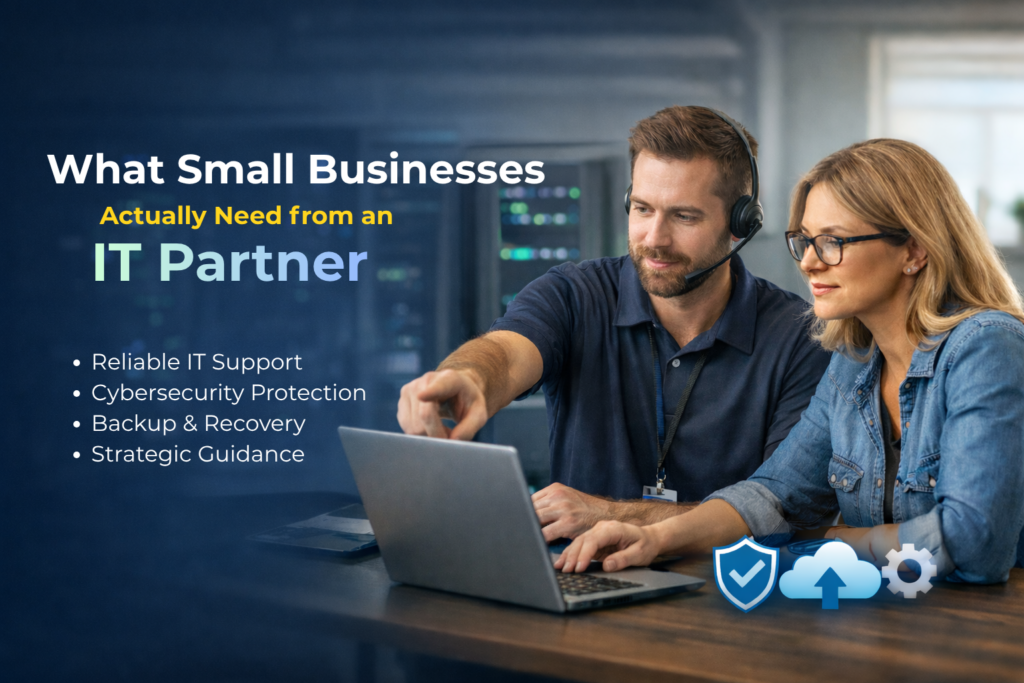
➡️ What Small Businesses Actually Need from an IT Partner
And if you’re unsure whether your current provider is truly protecting your business:
➡️ How to Tell If Your IT Provider Is Actually Protecting Your Business
Without a defined small business IT strategy, these issues compound over time.
How to Evaluate Your Current Approach
From a leadership perspective, the questions are simple:
- Do you understand your risk exposure?
- Do you know how long your business can operate without systems?
- Are your recovery capabilities clearly defined and tested?
- Is your IT strategy aligned with your business goals?
If any of these answers are unclear, the issue isn’t technical—it’s strategic.
Final Thoughts
Small business IT strategy isn’t just about technology. It’s about making informed decisions that reduce risk, improve performance, and support long-term growth.
Looking for a More Strategic Approach to IT Support?
At LOS Admin, we work with small businesses and mortgage companies to align technology with real business needs—focusing on clarity, security, and long-term stability.
If you’re ready to move beyond reactive support and take control of your IT strategy, it may be time for a different approach.