IT support for small business environments is often treated as something you only need when there’s a problem.
A computer stops working.
Email goes down.
Files can’t be accessed.
So you call someone to fix it.
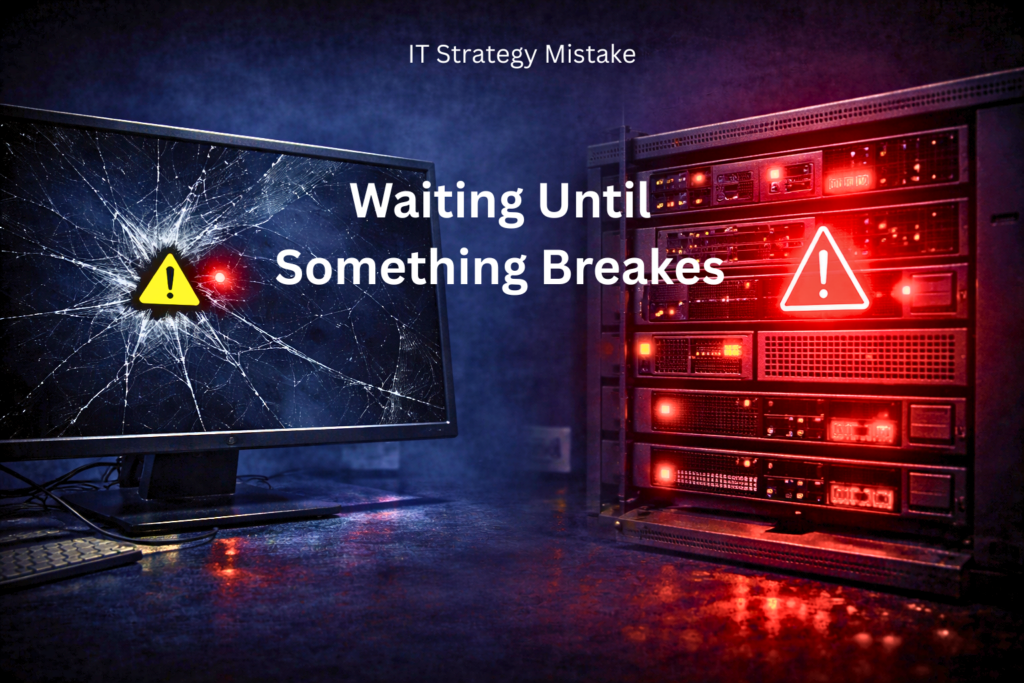
That approach feels practical—but it’s also the biggest IT mistake most small businesses make.
The “Break/Fix” Trap
Many businesses operate under what’s known as a break/fix model.
You wait until something breaks… then fix it.
While this may seem cost-effective, it creates long-term risk:
• Problems go unnoticed
• Systems fall behind on updates
• Security vulnerabilities increase
• Backups may not work when needed
The issue isn’t just the failure—it’s the lack of visibility before the failure.
Why This Model Fails Over Time
Technology issues rarely happen all at once.
They build slowly:
• A backup fails silently
• A server runs low on resources
• Security patches are missed
• User permissions become outdated
Each issue seems minor.
But together, they create a situation where one failure can disrupt the entire business.
This is where proper IT support for small business becomes critical—not just for fixing issues, but for preventing them.
What Proactive IT Looks Like
Modern IT support for small business environments focuses on prevention, not reaction.
This includes:
• 24/7 monitoring of systems
• Regular patching and updates
• Backup testing and verification
• Security monitoring and response
• Long-term technology planning
The goal is simple:
Catch issues early—before they impact operations.
Why Smaller IT Providers Can Be an Advantage
Many businesses assume they need a large provider to get reliable IT support.
That’s not always the case.
Smaller providers often offer:
• Direct communication
• Faster response times
• More personalized service
• Greater accountability
For businesses looking for dependable IT support for small business operations, this level of attention can make a significant difference.
When a provider is growing, every client matters—and that drives a higher level of service.
The Right Question to Ask
Instead of asking:
“Who do we call when something breaks?”
Ask:
“Who is making sure nothing breaks in the first place?”
That shift is what separates reactive IT from a true IT strategy.
Final Thoughts
If your current IT support model is reactive, it may be time to evaluate how your systems are being monitored, maintained, and protected.
LOS Admin provides IT support for small business environments with a focus on proactive monitoring, security, and long-term stability.